



The United States is mourning the death of Jesse Jackson, the veteran civil rights leader, two-time presidential contender and founder of the Rainbow PUSH Coalition, who died at the age of 84.
His family confirmed that the reverend passed away Tuesday morning surrounded by loved ones after battling progressive supranuclear palsy, a rare neurological disorder.
In recent years, he had faced multiple health challenges, including Parkinson’s-related symptoms.
Jackson’s life spanned some of the most transformative chapters in modern American history — from the Jim Crow era to the rise of the Black Lives Matter movement.
From Jim Crow South to National Stage
Born on October 8, 1941, in Greenville, South Carolina, Jackson emerged from humble and complicated beginnings in the segregated South to become one of the most recognisable voices in the fight for racial justice.
He rose to national prominence in the 1960s as a close aide to Martin Luther King Jr., playing a visible role in the civil rights movement.
Following King’s assassination in 1968, Jackson carved out his own path as a mobiliser, organiser and fiery orator.
His ability to fuse church-style cadence with political messaging made him one of the most compelling communicators of his generation.
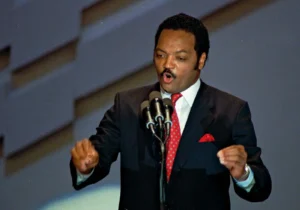
The “Rainbow Coalition” and Presidential Ambitions
In the 1980s, Jackson mounted two historic campaigns for the Democratic presidential nomination under the banner of his “Rainbow Coalition,” an alliance uniting Black, Latino, Asian American, Native American, working-class White and LGBTQ communities.
At a time when few believed a Black candidate could mount a serious national campaign, Jackson shattered expectations.
His campaigns broadened the Democratic Party’s coalition and helped shift it toward a more multicultural and progressive base.
Political analysts widely acknowledge that reforms Jackson pushed including proportional delegate allocation in primaries, later created the pathway that enabled Barack Obama to secure the Democratic nomination in 2008.
For historical context on U.S. presidential elections and party reforms, visit the U.S. National Archives:
👉 https://www.archives.gov/electoral-college
“Keep Hope Alive”
Jackson’s enduring message, “Keep hope alive,” became both a rallying cry and a personal creed. Across decades, he campaigned for voting rights, economic justice, prison reform and international diplomacy.
He negotiated the release of American prisoners abroad in the 1980s and 1990s and remained active in public demonstrations well into his later years. In 2000, he received the Presidential Medal of Freedom, the highest civilian honour in the United States.
In 2008, cameras captured Jackson in tears during Obama’s historic election victory speech — a moment many saw as the symbolic culmination of decades of struggle.
Controversies and Complexity
Jackson’s long public life was not without controversy. He faced criticism over remarks and personal decisions that occasionally overshadowed his activism. Yet his influence on American political culture remained profound.
He served as a bridge between the civil rights generation of the 1960s and a new era of multiracial political leadership, including the emergence of figures such as Kamala Harris.
In 2023, Jackson stepped down as president of the Rainbow PUSH Coalition after more than five decades at its helm.
A Lasting Legacy
Rev. Jesse Jackson’s impact stretched beyond electoral politics. He redefined what was possible for Black political leadership in America and amplified voices long excluded from the national conversation.
He is survived by his wife, Jacqueline, and his children.
As tributes pour in across the United States and beyond, many reflect on the arc of his life from a segregated South to shaping the very fabric of American democracy.