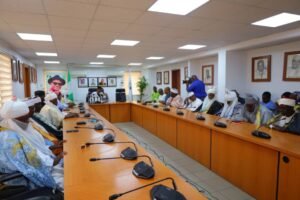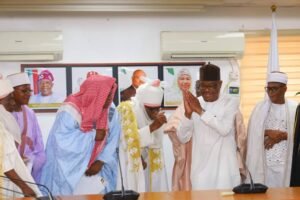



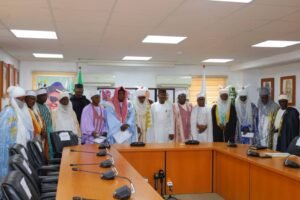
Minister of the Federal Capital Territory Administration, Nyesom Wike, has issued land allocation documents to members of the FCT Council of Chiefs, marking a major policy shift in favour of indigenous communities.
Speaking during a meeting in Abuja on Friday, Wike announced a complete waiver of all statutory fees tied to the land titles. He said President Bola Ahmed Tinubu approved the decision.
Government Recognises Indigenous Claims
Wike said the administration acknowledges the historical presence of native communities in the territory.
“We cannot ignore the people who lived here before the creation of the FCT,” he stated, adding that the government aims to build stronger ties with traditional institutions.
He described the land allocation as a gesture of inclusion and fairness, noting that it would be unjust to charge chiefs for land their communities have occupied for generations.
Support for Traditional Institutions
The minister praised traditional rulers for maintaining peace, especially during recent Area Council elections, which he described as the most peaceful in the FCT’s history.
To strengthen local security and coordination, Wike promised to provide utility vehicles to the chiefs.
Infrastructure Projects Near Completion
Wike also highlighted ongoing development projects across satellite towns. He confirmed that several key roads will be commissioned in June, including:
- Airport–Kuje road dualisation
- Bwari–Zuba link road
- Apo–Karshi corridor
- Basan Jiwa road network
- The “Arab Road” network
He said the projects aim to improve connectivity and support economic growth across the territory.
Chiefs React
Chairman of the Council and Ona of Abaji, Adamu Baba Yunusa, welcomed the move. He thanked the president and the minister, pledging continued support for government policies.
Why It Matters
The decision signals a shift in how authorities engage indigenous communities in the FCT. Analysts say it could ease long-standing tensions over land ownership and strengthen collaboration between government and traditional leaders.
For more on land governance and urban policy, visit the World Bank.