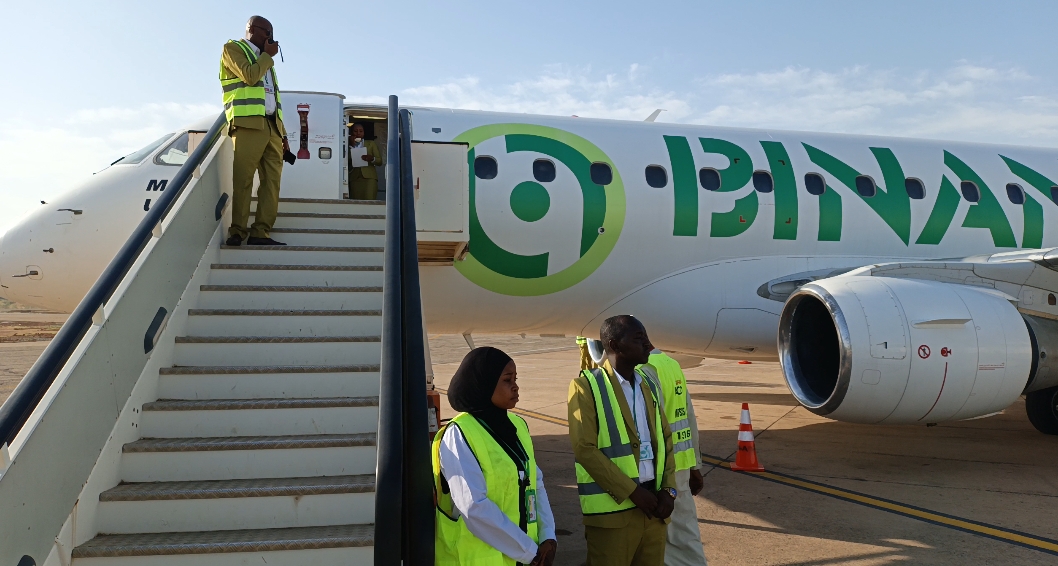



Nigeria could retain a significant share of the foreign exchange currently spent on overseas aircraft maintenance if a proposed Maintenance, Repair and Overhaul (MRO) facility by BINANI AIR in Abuja reaches full operation.
BINANI Global Air Services has engaged a global aviation firm to develop the facility at Nnamdi Azikiwe International Airport, with the project targeting about $218 million in annual foreign-exchange retention and attraction.
The company’s chairperson, Senator Aishatu Dahiru Ahmed Binani, disclosed the plan while outlining its potential impact on Nigeria’s aviation industry.
She said the project would reduce the dependence of Nigerian airlines on foreign maintenance centres, where carriers currently send aircraft for major maintenance checks.
The company says it expects the facility to be completed within 12 months. BINANI AIR’s announcement on the Abuja MRO project
Why Nigeria sends aircraft abroad for maintenance
Major aircraft maintenance requires specialised hangars, equipment, engineers and technicians.
Checks such as C-checks and D-checks involve extensive inspection and maintenance work. Airlines need certified facilities and highly trained personnel to carry them out safely.
Nigeria has limited capacity for some categories of heavy aircraft maintenance.
As a result, local airlines have historically sent aircraft to maintenance facilities in Europe, the Middle East and other African countries, including Egypt and Ethiopia.
Every overseas maintenance visit can create additional foreign-exchange costs for Nigerian carriers.
The expense goes beyond the maintenance bill. Airlines also have to account for aircraft positioning, accommodation, logistics and the revenue lost while an aircraft remains outside its normal operating network.
That makes local MRO capacity important not only for aviation companies but also for Nigeria’s wider economy.
The $218 million question
BINANI AIR says its proposed facility could retain and attract about $218 million in foreign exchange each year.
The figure is a projection from the company and its real value will depend on how much work the facility eventually handles, the aircraft types it can service, its certification status and whether other airlines choose to use it.
Abuja could become more than a passenger hub
The location of the proposed facility could also give Abuja a new role in Nigeria’s aviation industry.
Nnamdi Azikiwe International Airport already serves as the country’s main political and administrative gateway.
An operational heavy-maintenance facility could add another layer to that role.
Instead of aircraft coming to Abuja only to carry passengers, the airport could eventually support a wider aviation-services ecosystem involving maintenance, engineering, training and other technical activities.
The potential market could extend beyond Nigerian airlines.
If the facility secures the necessary approvals and develops sufficient capacity, it could seek customers from other African countries.
That could turn aircraft maintenance from an expense that sends Nigerian dollars overseas into a service that attracts revenue into the country.
The project could create a technical workforce
The economic impact could also extend beyond foreign exchange.
A functioning MRO facility would require aviation engineers, technicians, inspectors and other specialised workers.
It could also create demand for training and certification.
BINANI AIR’s wider aviation plans already include a Maintenance & Engineering division and a training centre designed to develop aviation professionals for Nigeria and the broader African market. BINANI AIR’s aviation ecosystem and training plans
If those plans develop alongside the MRO facility, the company could build an aviation-services business that goes beyond passenger operations.
For an industry that has struggled with shortages of highly specialised technical skills, that could become an important part of the project’s long-term value.
A new chapter for BINANI AIR
The MRO project represents a significant expansion of BINANI AIR’s ambitions.
The airline only received its Air Operator Certificate for scheduled operations from the Nigerian Civil Aviation Authority in March 2026. The NCAA said the certification allowed the airline to begin scheduled flight operations.
BINANI AIR subsequently began Abuja-Lagos services in May using Embraer E170 aircraft.
Moving from a relatively new passenger airline into aviation infrastructure would therefore give the company a broader role in the sector.
It would also allow BINANI AIR to participate in a part of the aviation value chain that has traditionally depended heavily on foreign providers.
The biggest test will be execution
Nigeria has discussed the need for stronger local aircraft maintenance capacity for years.
The challenge has rarely been identifying the problem.
The harder task has been delivering facilities that meet international safety and certification requirements and can operate commercially at scale.
The Abuja MRO will face that same test.
The company will need to complete construction, install the required equipment, recruit and train technical personnel, secure the relevant regulatory approvals and build a customer base.
The facility will also need to compete with established maintenance centres elsewhere in Africa and beyond.
What success would look like
If the project reaches full operation, its impact would be measured by more than the size of the hangar.
Success would mean Nigerian airlines sending more heavy-maintenance work to Abuja instead of overseas facilities.
It would mean fewer dollars leaving the country for routine and major maintenance services.
It could also mean new technical jobs, training opportunities and business for companies supplying the aviation maintenance ecosystem.
The bigger opportunity would be for Abuja to attract aircraft from other African markets and earn foreign exchange from maintenance services.
But those benefits remain potential outcomes until the facility is built, certified and operating.
For now, BINANI AIR has put forward an ambitious plan.
The next milestone will be turning the proposed MRO from a project announcement into a functioning facility capable of keeping Nigerian aircraft at home for major maintenance.