


The Federal Government has called for stronger mortgage financing, improved land administration and more effective institutions to accelerate affordable housing delivery across Nigeria.
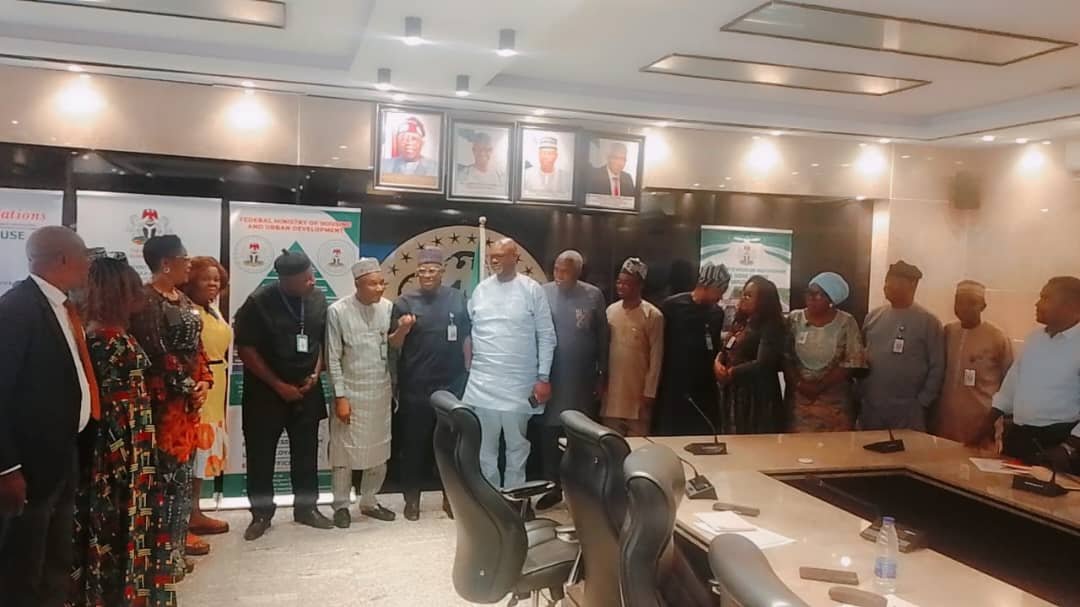
The Permanent Secretary of the Federal Ministry of Housing and Urban Development, Dr Shuaib Belgore, made the call during the 15th Meeting of the National Council on Lands, Housing and Urban Development in Sokoto State.
Belgore spoke while presiding over a meeting of permanent secretaries responsible for housing and urban development across the 36 states and the Federal Capital Territory.
The meeting, themed “Strengthening Mortgage, Land and Institutional Systems for Accelerated and Inclusive Housing Delivery,” brought together stakeholders to discuss challenges and develop practical solutions for the housing sector.
Belgore described the National Council as a critical platform for policy dialogue and collaboration between the Federal and state governments.
He identified access to finance, land availability and institutional effectiveness as the three major pillars required to improve housing delivery.
Belgore Seeks Affordable Mortgage Financing
On mortgage financing, Belgore stressed the need for systems that reflect the financial realities of Nigerians, particularly low- and middle-income earners.
He said accessible and attractive mortgage options would encourage demand and expand opportunities for homeownership.
He also emphasised the importance of properly planned land, effective physical planning and efficient land administration.
According to him, stronger collaboration between federal and state governments is essential to resolving land-related challenges because state governments play significant roles in land administration and the provision of land for housing development.
Belgore called for stronger institutions at both levels of government, noting that improved technical capacity, digital systems, inter-agency coordination and accountability would help translate policies into measurable results.
He further advocated an inclusive housing system that considers differences in income, age, social status and geographical location, alongside the availability of supporting infrastructure.
High Construction Costs, Land Issues Remain Challenges
The permanent secretary acknowledged that significant obstacles continue to hinder access to decent and affordable homes despite previous government interventions.
He listed inadequate access to secure land, high construction costs, limited housing finance, bureaucratic bottlenecks and expensive land registration and titling processes among the major challenges.
Other concerns include inconsistent policies and implementation between federal and state governments, as well as ownership issues associated with the Land Use Act.
Belgore assured participants that the Federal Government would continue refining its policies and programmes to create an enabling environment for greater private-sector participation.
He said the administration of President Bola Ahmed Tinubu recognises the country’s housing challenges, with housing identified as a key development priority under the Renewed Hope Agenda.
He added that housing finance must be affordable, accessible and responsive to the varying needs and income levels of Nigerians.
He also stressed the need to equip institutions responsible for land administration, physical planning, development control, housing delivery, regulation and financing to perform their duties effectively.
Belgore Urges Action On Housing Recommendations
Belgore urged permanent secretaries to carefully examine reports from the meeting’s thematic groups, harmonise recommendations and resolve inconsistencies.
He said proposed measures must be realistic, actionable and consistent with the responsibilities of the different levels of government.
“The success of the Council would not be determined by discussions alone, but by the quality of decisions reached and the extent to which the recommendations are translated into practical action,” he said.
He described the permanent secretaries’ meeting as an important link between technical discussions by thematic groups and policy-level deliberations involving commissioners and ministers.
Sokoto Commissioner, UN-Habitat Advocate Inclusive Planning
Speaking earlier, the Sokoto State Commissioner for Lands, Housing, Survey and Town Planning, Barrister Nasiru Dantsoho, said the meeting should produce practical and sustainable policies to improve Nigerians’ living conditions.
He called for policies that address the housing needs of all segments of society, particularly low-income earners and farmers who often face difficulties accessing affordable housing and land ownership.
Dantsoho also highlighted the importance of stronger institutional frameworks and improved access to mortgage facilities in expanding homeownership.
In a presentation, the Chief Technical Advisor and Head of the UN-Habitat Nigeria Country Office, Nina Rinne, said effective land-use planning and strategic investment were essential for sustainable housing and urban development.
She warned that poor planning increases infrastructure costs and exposes communities to environmental risks, arguing that planning should be treated as an investment rather than an additional expense.
Rinne also described housing as a continuous process rather than merely a finished product, stressing that development decisions must account for long-term needs.
Given Nigeria’s growing population and limited land resources, she called for strategic land management that balances urban development with environmental protection and agricultural production.
She said decisions on where land should be developed or protected were essential to sustainable urban growth and food security.
The deliberations and resolutions from the permanent secretaries’ meeting will be forwarded to the council of state commissioners, chaired by the Minister of Housing and Urban Development, for final adoption.