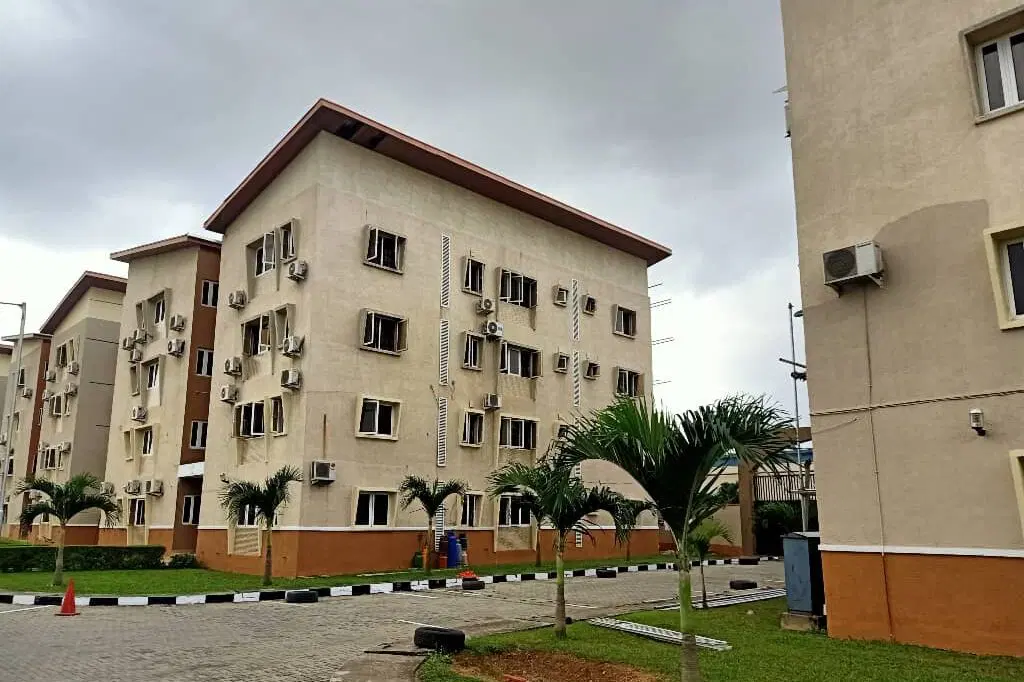
Nigeria Housing Crisis: Why Building More Houses Is Not Enough
Nigeria needs more homes, but construction alone cannot solve the housing crisis. High land prices, expensive building materials, limited mortgage access and low household incomes continue to put decent housing beyond the reach of millions.
Afri-Global News Desk delivers credible, timely and insightful news, analysis and stories covering Nigeria, Africa and global developments that matter.
Nigeria’s housing crisis will not end simply because the government announces another housing estate, commissions new buildings or promises to deliver thousands of additional homes. Those efforts may increase the country’s housing stock, but they will not solve the problem if the people who need homes most cannot afford to buy or rent them. The real test of housing policy is not just how many houses are built, but how many people can actually afford to live in them.
This is where Nigeria’s housing conversation needs a fundamental shift. For years, housing interventions have often focused on construction targets, estate development and the number of units delivered. These are important measures, but they tell only part of the story. A completed house that remains beyond the financial reach of ordinary Nigerians cannot, on its own, solve the housing needs of the population.
The country must begin to treat housing as more than a construction challenge. It is also an affordability problem, a land administration problem, a mortgage finance problem, an income problem and, ultimately, a question of whether economic growth is translating into better living conditions for citizens.
The Problem Is Bigger Than the Number of Houses
Nigeria needs more homes, but the country also needs homes that match the financial realities of its population. A housing development may look impressive, with modern buildings, roads and other facilities, yet remain inaccessible to the people who struggle daily to pay rent or save towards homeownership.
Consider a civil servant earning a modest monthly salary, a young professional beginning a career, a trader whose income fluctuates or a family depending on one regular source of income. These people may need decent housing as urgently as anyone else. Yet the prices attached to many newly developed properties can place them far beyond the reach of their household budgets.
This creates a troubling contradiction. Nigeria can continue to build houses while millions of people remain unable to secure homes that meet their needs and financial capacity. The problem is not necessarily that every new development has failed. It is that housing delivery cannot be judged by construction alone.
We need to ask who the homes are being built for, what they cost, how buyers are expected to pay and whether the intended beneficiaries can sustain the payments over time. Without those questions, housing targets risk becoming impressive statistics that do not adequately reflect the lived experience of ordinary Nigerians.
When House Prices Rise Beyond People’s Incomes
One of the most serious barriers to homeownership is the widening gap between housing costs and household incomes. Building materials, land, transportation, infrastructure, labour and financing all contribute to the final cost of a property. When these costs rise, developers face pressure to increase selling prices or rents.
The consequences are particularly severe for households whose earnings do not rise at the same pace. A family may work harder, reduce spending and save consistently, yet find that the price of the home it wants keeps moving further away. For many young Nigerians, owning a home has become a long-term aspiration rather than a realistic goal they can plan around.
The problem also affects renters. When landlords face higher construction, maintenance and financing costs, those pressures can contribute to higher rents. Tenants then spend a larger share of their earnings on accommodation, leaving less money for food, transportation, healthcare, education and savings.
This is why affordability must become a central measure of housing performance. Government should not only report the number of homes delivered; it should also explain how the prices compare with the incomes of the people the programme intends to serve.
A housing policy that produces homes but ignores purchasing power risks leaving the central problem unresolved.
Land Costs Can Make Affordable Housing Unaffordable
Land is one of the foundations of housing development, but its cost can determine whether a project remains affordable or becomes accessible only to higher-income buyers. In areas where demand is strong, developers may face expensive land acquisition, title documentation, survey, registration and other related charges.
The burden does not always end with the initial purchase. Delays in obtaining approvals, uncertainty over land titles, disputes and complex administrative procedures can increase development costs. Developers must eventually account for these expenses, and some of that burden may reach the final buyer or tenant.
This is one reason why affordable housing cannot be achieved through construction incentives alone. If governments encourage developers to build lower-cost homes but leave them to acquire expensive land, navigate lengthy approvals and provide essential infrastructure at high cost, the economics may not support the intended selling prices.
State governments therefore have a major role to play. They control important aspects of land administration, planning approvals and development regulation. More transparent land allocation, predictable approval processes, better land records and properly planned development corridors could help reduce unnecessary costs and uncertainty.
Government should also examine how it can make suitable land available for projects designed specifically for low- and middle-income households. Such arrangements must include transparent allocation procedures and safeguards against speculation, land grabbing and the diversion of public benefits to people who do not need them.
Affordable housing begins long before the first block is laid. It begins with the cost and conditions under which land becomes available for development.
Mortgage Finance Must Work for Ordinary Nigerians
Even when a property is reasonably priced, many Nigerians cannot purchase it because they lack access to suitable long-term finance. Most households cannot pay the full cost of a home upfront. They need a financing arrangement that allows them to spread the cost over several years without making repayments impossible to sustain.
This is where mortgage finance becomes critical. In a functional housing finance system, eligible buyers should be able to obtain loans with understandable terms, reasonable repayment structures and conditions that reflect their capacity to pay. But access to mortgages remains difficult for many workers, informal-sector earners and small-business owners.
Some households have no conventional payslips. Others earn income that changes from month to month. Many operate small businesses or work independently, making it harder to satisfy lending requirements designed around formal employment and predictable salaries.
A housing finance system that serves only people with conventional employment records will leave a significant part of the population outside the market. Financial institutions and policymakers must explore responsible ways to assess income, affordability and repayment capacity for people whose earnings do not follow the standard monthly salary model.
This does not mean lenders should abandon credit checks or provide loans without assessing risk. Unsustainable lending can harm borrowers and financial institutions alike. The objective should be to design financing products that responsibly accommodate more Nigerians, including workers in the informal economy.
The Federal Mortgage Bank of Nigeria, the Nigeria Mortgage Refinance Company, commercial banks, primary mortgage banks, pension-related housing initiatives and other relevant institutions should continue examining how their products can reach more eligible households. Their performance should be measured not only by the value of financing provided, but also by who gains access and whether repayment terms are realistic.
Long Repayment Periods Are Not Enough
Extending the repayment period can reduce monthly mortgage instalments, but it does not automatically make a property affordable. If the purchase price is too high, the interest rate is excessive or the buyer’s income is too low, a longer repayment period may still leave the household struggling.
This distinction matters because housing affordability involves more than the monthly payment. Buyers must also account for deposits, legal fees, insurance, service charges, maintenance, utilities and other recurring costs. An estate may advertise an attractive repayment arrangement while the total cost of ownership remains beyond the buyer’s means.
Policymakers and financial institutions should therefore assess the complete financial burden of homeownership. They should explain the total repayment amount, the interest payable, the initial deposit, the likely additional charges and the consequences of missed payments.
Housing finance must be transparent enough for buyers to make informed decisions. It should also be structured around sustainable household budgets rather than simply making an expensive property appear affordable through smaller monthly instalments.
Affordable Housing Must Include the Rental Market
Homeownership is an important aspiration, but not every Nigerian is ready or able to buy a house immediately. Some people are students, young workers, temporary residents, newly married couples or families whose financial circumstances make renting more practical.
A serious housing policy must therefore address rental affordability alongside homeownership. It is not enough to build estates for sale while overlooking households that need decent accommodation but cannot afford a deposit or qualify for a mortgage.
Nigeria needs a broader range of housing options, including well-planned rental developments, social and subsidised housing where appropriate, and professionally managed rental properties that provide decent living conditions at prices compatible with household incomes.
Public authorities should also improve the evidence available on rents, vacancy rates, household incomes and the location of housing demand. Better information would help governments identify areas experiencing severe pressure and design interventions around actual needs rather than assumptions.
Rental policy must balance the interests of tenants and property owners. Landlords need a reasonable opportunity to maintain their properties and recover legitimate costs, while tenants need clear agreements, fair treatment and protection against unlawful practices. The objective should be a rental market that supports investment without making decent accommodation unattainable for lower-income households.
The Cost of Building Must Come Down
Nigeria cannot sustainably expand affordable housing without confronting the cost of construction. Developers must contend with material prices, transportation expenses, energy costs, labour, infrastructure requirements and financing. These pressures can make it difficult to deliver homes at prices ordinary households can afford.
One response is to improve the supply chain for building materials. Nigeria should encourage investment in locally produced, quality-assured materials where domestic production can compete effectively. Greater efficiency in manufacturing, transport and distribution could help reduce avoidable costs.
The country should also support research into building systems and designs that use materials efficiently without compromising structural safety, durability, climate suitability or habitability. Innovation should not become an excuse for constructing inferior homes for poorer Nigerians. Affordable housing must still be safe, dignified and fit for long-term occupation.
Standardised designs, efficient procurement, appropriate technology and better project management can also reduce waste. Developers should be encouraged to examine the full life-cycle cost of housing, including maintenance and energy use, rather than focusing only on the initial construction price.
However, government must distinguish between genuine cost reduction and the transfer of costs to buyers through poor construction, inadequate infrastructure or expensive future repairs. A home is not truly affordable if the household must later spend beyond its means to correct defects or maintain basic services.
Infrastructure Matters as Much as the Building
A house does not exist in isolation. People need access to roads, water, electricity, drainage, sanitation, schools, healthcare, markets and places of work. When these services are missing, households may face additional expenses and longer journeys that undermine the apparent affordability of the property.
This is a particular risk when affordable housing projects move far away from established urban centres because land is cheaper there. The lower purchase price may appear attractive, but residents can lose much of that benefit through transportation costs, unreliable services and the time required to reach employment.
A family should not have to choose between an affordable home and access to economic opportunity. Housing development must therefore be coordinated with transport planning, infrastructure provision and employment centres.
Federal, state and local authorities need to work with developers and utility providers to ensure that housing projects have the infrastructure required for decent living. Where public funds support an estate, the government should clearly explain which services it will provide, when they will be delivered and who will maintain them.
The true cost of housing includes the cost of living around it. A development that offers cheap units but imposes high daily expenses may not provide the affordability it promises.
Government Should Measure Outcomes, Not Just Units
Housing announcements often attract attention because they include large construction targets. But the number of units announced is not the same as the number completed, and the number completed is not the same as the number occupied by the people who need them.
Nigeria needs a more transparent way of measuring housing delivery. Public reporting should distinguish between planned units, units under construction, completed units, units sold, units occupied and units that remain vacant. It should also identify the intended income groups and explain how the programme addresses their financial capacity.
Where governments provide land, infrastructure, subsidies or other support, they should publish the terms and explain how those benefits translate into lower costs for buyers or tenants. If public resources help reduce development expenses but the final homes remain inaccessible to the intended beneficiaries, policymakers should investigate why.
Independent evaluation would help identify what works, what fails and what needs to change. It would also make it easier to compare housing programmes across states and learn from successful approaches.
Nigeria should judge housing interventions by the quality, affordability, accessibility and long-term usefulness of the homes delivered. Construction figures matter, but they must not become a substitute for measuring whether people can actually secure decent accommodation.
Housing Policy Needs a Stronger Partnership With the Private Sector
Government alone cannot finance and deliver all the homes Nigeria needs. Private developers, financial institutions, pension funds, construction companies, housing cooperatives and other investors can contribute capital, expertise and innovation.
But private investment will not automatically produce affordable housing. Developers must recover their costs and earn returns, while households have limits on what they can pay. The challenge is to design partnerships that make projects commercially viable without excluding the intended beneficiaries.
Government can help by improving land administration, providing enabling infrastructure, clarifying regulations and creating predictable investment conditions. Financial institutions can develop suitable funding structures. Developers can explore more efficient designs and construction methods. Employers and housing cooperatives can help eligible members save towards deposits or access suitable financing.
Public-private partnerships should have clear objectives and transparent accountability. Where government support aims to lower prices, agreements should specify how the benefit reaches buyers or tenants. Public land and subsidies should not become indirect gifts to private interests without a measurable public benefit.
The central objective must remain clear: investment is necessary, but the housing outcomes must respond to genuine need.
Housing Is Also an Economic and Social Issue
The consequences of unaffordable housing extend well beyond the property market. When households spend too much of their income on rent or mortgage repayments, they have less money for other essential needs. Families may postpone education expenses, reduce healthcare spending, accumulate debt or move farther away from employment opportunities.
Housing pressure can also affect productivity. Workers who live far from their workplaces may spend more time and money commuting. Young adults may delay starting independent households. Families may remain in overcrowded accommodation because they cannot afford to move into suitable homes.
These pressures can reinforce inequality. Households with inherited property or substantial savings have a different starting point from those who must build their assets entirely from their earnings. When housing costs rise faster than incomes, the distance between those groups can widen.
For these reasons, housing should be integrated into broader economic planning. Employment, transport, land policy, infrastructure, household income and access to finance all influence whether people can secure decent accommodation.
A country cannot fully address the housing challenge by treating it as a matter for construction companies alone. It requires coordinated economic and social policy.
The Real Test Is Whether Ordinary Nigerians Can Afford the Homes We Build
Nigeria needs more housing, but it also needs a better way of delivering it. The country must confront land costs, construction expenses, limited mortgage access, low purchasing power, rental pressure and inadequate infrastructure together rather than treating each problem as an isolated issue.
Government should publish clear and measurable affordability targets. Developers should be encouraged to produce homes that match different income groups. Financial institutions should broaden responsible access to housing finance. State governments should make land administration more transparent and predictable. Housing programmes should also be evaluated by what happens after construction, including whether homes are occupied and whether their costs remain sustainable for residents.
Most importantly, policymakers must listen to the people the system is supposed to serve. Housing needs differ across income groups, locations, household sizes and stages of life. A one-size-fits-all approach cannot adequately respond to those differences.
Nigeria’s housing crisis will not disappear because another estate has been commissioned or another ambitious construction target has been announced. Progress will come when more households can move from insecure or overcrowded accommodation into safe, decent homes without sacrificing other essential needs.
Building more houses is necessary. Building houses people can afford is the real test. Until Nigeria places affordability, access to finance and the cost of living at the centre of housing policy, the country risks continuing to build homes while leaving too many Nigerians unable to call one their own.
By Prince Folorunsho Adegoke (PFA) Media & Strategic Communications Professional; News Editor at Housing TV Africa and Afri-Global News