Prince Folorunsho Adegoke is a media professional and journalist with experience in digital, television and print journalism. He covers Nigerian affairs, African development, international relations, housing and economic issues.
Nigeria’s petrol market is facing a fresh contradiction: domestic refining capacity is expanding rapidly, yet imported petrol is taking a larger share of the market while pump prices continue to rise.
Data cited by the Centre for the Promotion of Private Enterprise (CPPE) shows that average daily petrol imports rose from 5.9 million litres in May to 19.7 million litres in July.
That represents a 234% increase in three months.
Imports accounted for 43.3% of total petrol receipts in July, up from 12.4% in May. At the same time, domestic petrol supply fell from 41.5 million litres a day in May to 25.8 million litres in July. The latest data on Nigeria’s petrol imports and domestic supply
The figures have raised fresh questions about whether Nigeria’s growing refining capacity is translating into greater fuel security and more stable prices for consumers.
Why petrol prices are still rising
The import surge comes as Nigerians face another round of petrol price increases.
Dangote Petroleum Refinery raised its petrol gantry price to ₦1,265 per litre on August 29.
It was the third increase in eight days.
The refinery had previously raised its price from ₦1,165 to ₦1,185 per litre on August 21, then to ₦1,200 on August 26.
The three adjustments have increased its gantry price by ₦100 per litre in just over a week.
Retail prices have followed.
Pump prices have risen above ₦1,300 in Abuja and other parts of the country. In some locations, petrol is approaching ₦1,400 per litre.
That is putting additional pressure on motorists, transport operators and businesses that depend on fuel for daily operations.
The Dangote refinery wants fewer imports
The latest figures have intensified a dispute between domestic refining interests and fuel importers.
Dangote Refinery is now considering restricting petrol sales to major marketers that continue importing the product.
The proposed measure could take effect this week, although further consultations could still change the plan.
The refinery says some marketers are importing petrol and then blending it with products purchased from Dangote.
But the dispute goes beyond product quality. It is also about who controls access to Nigeria’s petrol market.
Why importers say they are still needed
Nigeria’s downstream market operates without the old petrol subsidy system.
Marketers therefore have to consider the cost of obtaining products, transporting them and replacing their stocks when setting pump prices.
Imports can provide another source of supply and create competition.
That argument is central to the position of the Nigerian National Petroleum Company Limited and some marketers.
The concern is that restricting imports could give a dominant domestic refiner too much influence over petrol prices.
That is why the issue has become a difficult balancing act for regulators.
The government must encourage domestic refining without creating a market where consumers have limited alternatives.
The numbers reveal a bigger problem
The most striking part of the latest data is not simply the rise in imports.
It is the simultaneous fall in domestic petrol supply.
Nigeria now has a refinery capable of producing hundreds of thousands of barrels a day, yet the volume of locally supplied petrol has declined sharply.
That raises an important question:
Why is imported petrol gaining market share when Nigeria’s refining capacity is expanding?
One explanation is that refining capacity and actual domestic supply are not the same thing.
Refineries need reliable crude, competitive pricing and efficient distribution.
Dangote Refinery has previously said access to Nigerian crude remains a challenge.
Reuters reported last week that about 30% to 40% of the refinery’s crude feedstock is imported, adding another layer of exposure to international supply and logistics costs.
That means Nigeria can have a large refinery and still remain partly exposed to international energy markets.
Consumers are caught in the middle
For ordinary Nigerians, the debate over imports and domestic refining has a simple outcome: the price at the pump.
When petrol prices rise, transport operators face higher costs. Those costs can then spread through the economy. Food distribution becomes more expensive. Businesses that use generators spend more. Workers spend more to travel. Manufacturers face higher logistics costs.
The effect therefore goes beyond motorists.
That is why the latest increase is generating concern even as policymakers celebrate the growth of domestic refining.
What should regulators do?
The CPPE is calling for a more transparent system for approving petrol imports.
The group says imports should address clearly identified supply gaps rather than compete with adequate domestic production.
It has urged the Nigerian Midstream and Downstream Petroleum Regulatory Authority to publish information on import permits, product landings and domestic supply.
Such transparency could help answer a question that is becoming increasingly important:
Is Nigeria importing petrol because it genuinely needs the additional supply, or because the market has not yet adjusted to the rise of domestic refining?
The answer matters for consumers, refiners and investors.
A test for Nigeria’s refining ambitions
Nigeria spent decades depending heavily on imported refined petroleum products.
The emergence of the Dangote refinery was supposed to change that equation.
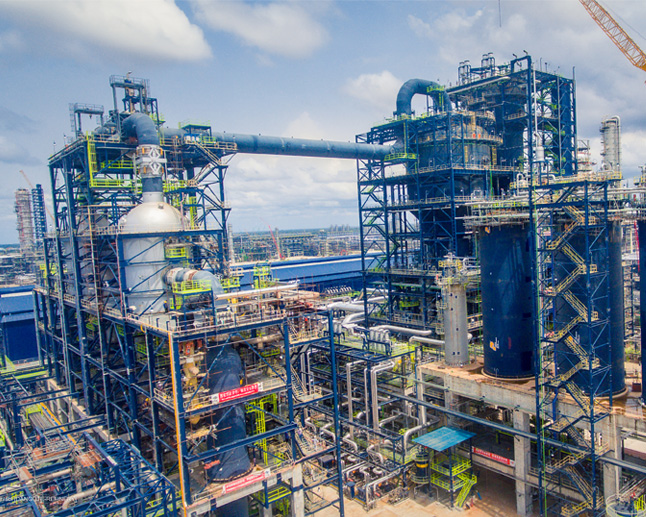
The refinery now supplies large volumes of petrol and other products and has helped transform Nigeria’s position in regional petroleum markets.
But the latest import figures show that the transition is far from complete.
Nigeria must now find a way to protect competition while ensuring that domestic refiners can operate efficiently.
It must also make sure that consumers benefit from increased local production.
The success of the refining revolution should ultimately be measured by more than refinery capacity.
It should be visible in reliable supply, stronger energy security and prices that Nigerians can afford.
Until those benefits reach the pump, the country’s refining boom will continue to face questions about what it is actually changing for consumers.
Cybersecurity researchers expose weaponized digital advertising networks deploying automated surveillance software directly onto mobile devices without requiring user interaction.
Cybersecurity...