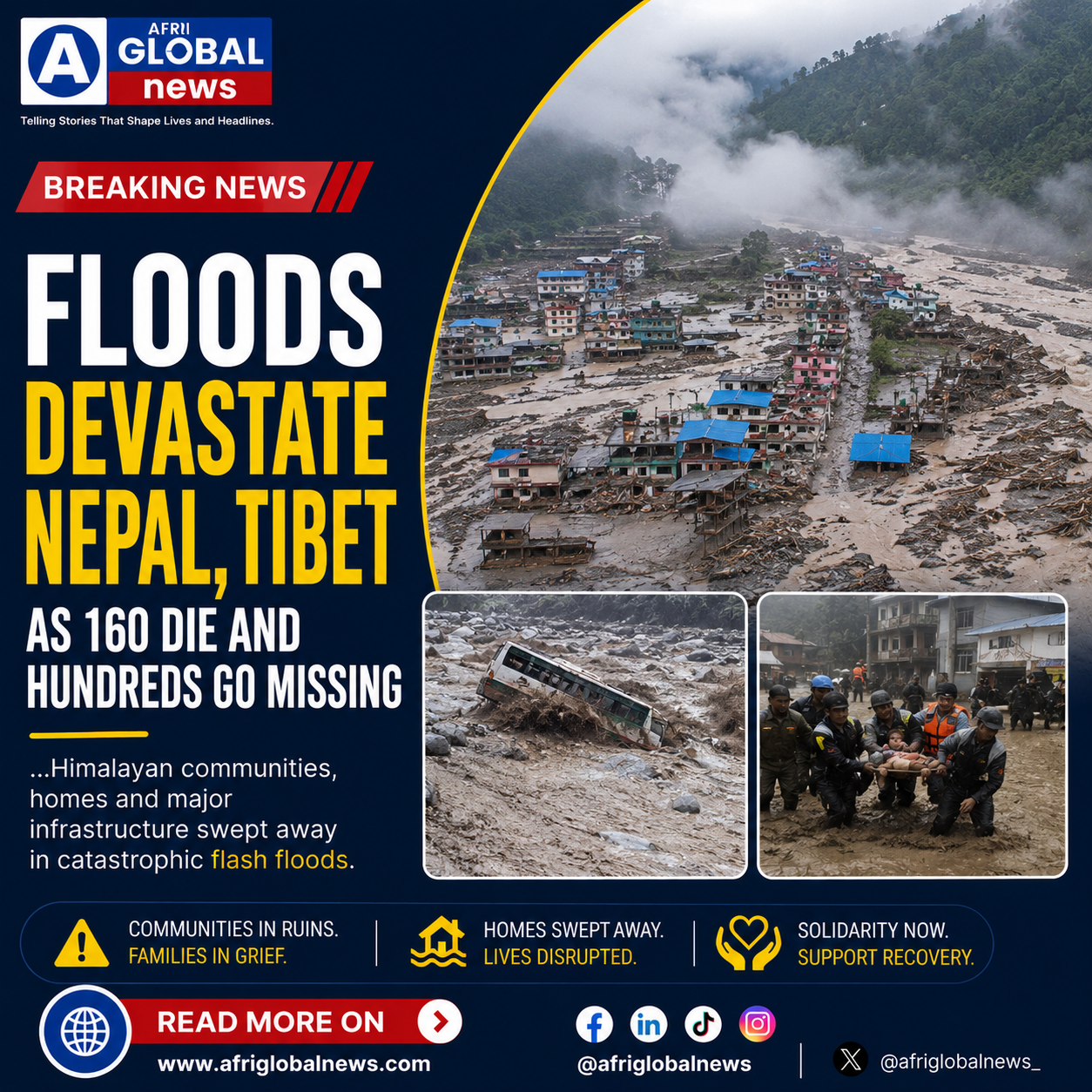



Nepal is facing a deepening humanitarian crisis after catastrophic flash floods swept through communities in the country’s mountainous north, leaving at least 93,000 people affected and in urgent need of assistance.
The disaster has destroyed homes, roads, bridges and vital infrastructure, while thousands of families have been displaced and communities remain difficult to reach.
The floods struck on August 26 after a sudden surge of water entered the Bhote Koshi River system, sending torrents of water, mud, rock and debris through parts of Rasuwa, Nuwakot, Dhading and neighbouring areas.
Nepal’s Ministry of Foreign Affairs said the flooding caused widespread displacement and extensive damage to houses, roads, bridges, hydropower facilities and other critical infrastructure. Nepal’s latest official flood update
93,000 people now need help
The International Federation of Red Cross and Red Crescent Societies estimates that about 93,000 people have been affected and are in urgent need of humanitarian assistance.
The organisation says thousands of homes have been destroyed or severely damaged, while roads and bridges have been washed away, cutting off some of the worst-hit communities.
The scale of destruction has made it difficult for relief teams to determine the full extent of the damage because some areas remain inaccessible.
For survivors, the immediate challenge is finding somewhere safe to stay while waiting for food, clean water, medical assistance and other essential supplies.
Children are among the most vulnerable
The disaster is also threatening the wellbeing of thousands of children.
UNICEF estimates that 17,000 children in Rasuwa, Nuwakot and Dhading urgently need humanitarian assistance.
The agency says entire communities were swept away, while roads and bridges collapsed and hydropower, water and telecommunications networks were disrupted.
At least 18 schools have been destroyed and another 20 damaged, according to UNICEF.
For children who survived the floods, the crisis therefore extends beyond the immediate danger.
Some have been separated from their families, while others are now living in temporary shelters without access to normal schooling, healthcare and other essential services.
Healthcare has also taken a major hit
The destruction has placed additional pressure on an already difficult emergency response.
WHO says around 10,000 households are reported to need immediate relief, while three health posts have been completely damaged and a hospital has suffered partial damage.
Access to two other hospitals has also been affected.
The disruption of healthcare, water and sanitation services creates another danger: outbreaks of communicable diseases.
WHO warns that displacement and overcrowding, combined with damaged water and sanitation systems, could increase the risk of diarrhoeal and respiratory illnesses, as well as other public-health problems. WHO’s assessment of the health impact
Roads and bridges have cut communities off
The flood has not simply damaged individual homes.
It has disrupted the infrastructure that connects communities to one another and allows emergency teams to reach people who need help.
Multiple bridges have been washed away, while major roads have been damaged or destroyed.
The United Nations has estimated that more than 40 bridges were destroyed or badly damaged, while more than 40 kilometres of road were completely destroyed.
That creates a difficult cycle.
People who have lost their homes need assistance, but the destruction of roads and bridges makes it harder for aid workers to reach them.
The result is that some of the people most in need may also be among the hardest to reach.
Entire communities have been transformed
The devastation is particularly severe in parts of Rasuwa.
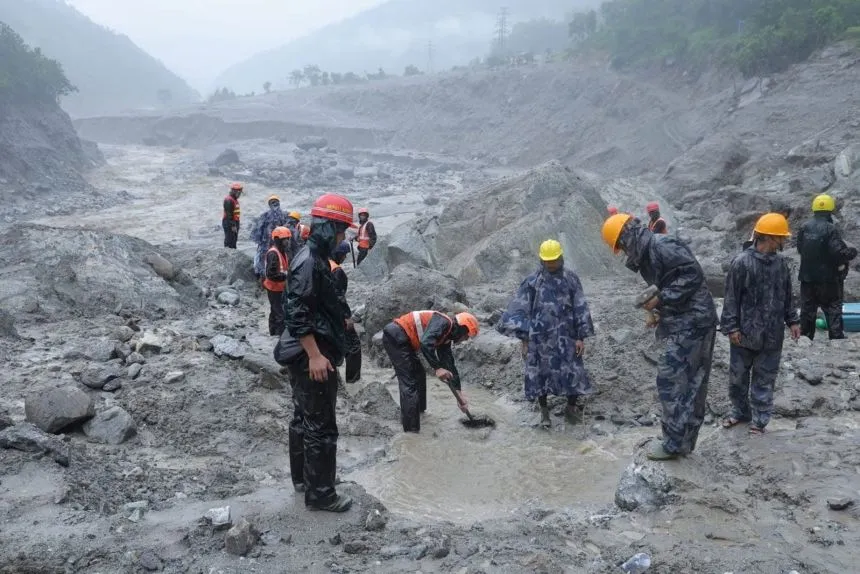
Survivors have described landscapes that have become almost unrecognisable, with homes, markets and public facilities replaced by mud, rocks and debris.
The flooding also damaged infrastructure along a strategically important route connecting Kathmandu with Tibet, affecting transport, trade and movement through the region.
For families whose homes and livelihoods have been destroyed, the disaster will not end when the floodwaters recede.
They will face the much longer task of rebuilding homes, restoring businesses, returning children to school and reconnecting communities to essential services.
The disaster is still unfolding
Rescue teams continue to search for missing people while authorities monitor additional flood risks in the region.
The Nepalese government says 538 bodies had been recovered from river areas as of its latest update, while many people including locals and tourists remain missing.
The International Red Cross has warned that the disaster is not over, with concerns about secondary flooding from lakes formed by the landslide.
That means communities already struggling to recover from the initial disaster remain exposed to further danger.
What happens after the rescue?
The immediate priority is clear: find survivors, recover the missing, provide emergency shelter and get food, water and medical care to affected communities.
But Nepal will also face a much larger recovery challenge.
The destruction of homes, schools, roads, bridges, health facilities and power infrastructure means thousands of people could remain displaced long after the immediate emergency has passed.
For the 93,000 people estimated to have been affected, the most difficult chapter may begin after the rescue operation ends.
The question will then be how quickly Nepal can rebuild the communities that the floods have left behind and whether families who lost homes, livelihoods and loved ones will have the support needed to start again.