Prince Folorunsho Adegoke is a media professional and journalist with experience in digital, television and print journalism. He covers Nigerian affairs, African development, international relations, housing and economic issues.
Nigeria’s proposed restriction on preaching and hawking in public buses has opened another debate about the limits of government regulation and the rights of citizens in shared public spaces.
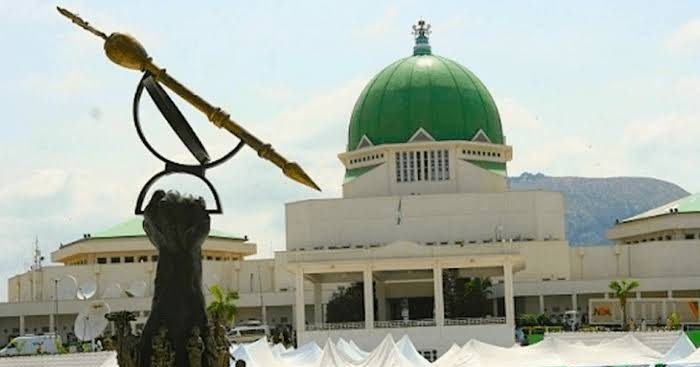
The issue gained fresh attention after the National Assembly passed a bill seeking to prohibit preaching, hawking and certain other activities in public buses. The reported justification is that such activities could distract drivers and increase the risk of road accidents.
But should preaching inside a moving bus attract a N50,000 fine?
That question deserves more than a simple argument for or against religion. It requires a careful examination of public safety, individual freedoms and the practical realities of Nigeria’s transport system.
Why the Debate Matters
In an opinion article published by The Punch, Biodun Ajibola, Senior Pastor of House of Revival International Mission, strongly criticised the proposed restriction.
Ajibola argued that authorities should provide clear evidence linking bus preaching to road accidents before treating it as a major safety concern. He also pointed to other activities that frequently occur inside public buses, including loud music, arguments and heated exchanges between drivers, conductors and passengers.
His argument raises a legitimate question: if distraction is the primary concern, should regulation focus on preaching alone?
That is where the debate becomes more complicated.
Public Safety Is a Legitimate Concern
There is no doubt that governments have a responsibility to protect passengers and other road users.
A commercial driver needs to maintain concentration. Any activity that significantly distracts a driver can potentially create danger.
Therefore, if passengers, preachers, hawkers or other individuals interfere with a driver’s ability to operate a vehicle safely, authorities have a reasonable basis to intervene.
However, the solution should address the safety problem directly.
A blanket restriction on religious expression may raise questions if authorities cannot clearly demonstrate why preaching itself presents a greater danger than other common distractions inside public transport.
The distinction is important.
Government can regulate behaviour that creates a genuine safety risk without unnecessarily restricting lawful expression.
Nigeria’s Long Tradition of Bus Evangelism
Ajibola also highlighted the historical role of bus evangelism in Nigeria.
According to his account, he began preaching on Lagos buses as a teenager and considers public transport an important avenue for reaching people with the Christian message. He described personal experiences from his early ministry and argued that many Nigerians have encountered Christianity through informal evangelism in public spaces.
Whether one shares his religious convictions or not, the broader point deserves consideration.
Public transport reflects Nigeria’s social diversity. People from different religious, ethnic and economic backgrounds often share the same space for several hours each day.
That reality makes public buses an unusual but significant platform for social and religious interaction.
At the same time, that shared environment also requires consideration for passengers who may not wish to participate in religious activities.
The Rights of Other Passengers Also Matter
A balanced discussion must therefore consider both sides.
A person should have the freedom to practise and express their faith within the limits of the law. However, other passengers also have a right to travel without harassment, intimidation or excessive disturbance.
For example, a preacher who speaks respectfully to willing listeners presents a different situation from someone who blocks movement, aggressively confronts passengers or distracts the driver.
The same principle should apply to other activities.
A hawker who obstructs passengers or interferes with the driver should face appropriate restrictions. Likewise, extremely loud music, violent arguments or any other behaviour that creates a genuine safety risk should attract reasonable regulation.
The issue should therefore be conduct and safety, not simply the identity or purpose of the person engaging in the activity.
Is a N50,000 Fine Proportionate?
This is perhaps the most important question.
A financial penalty can serve as a deterrent. However, lawmakers should ensure that penalties are proportionate to the offence and supported by clear evidence.
For many Nigerians, N50,000 is a substantial sum. A penalty of that size could represent a significant financial burden, particularly for people who rely on informal religious activities or small-scale trading.
Consequently, enforcement must be transparent.
Authorities should clearly define what constitutes an offence, who can enforce the restriction and what evidence would justify a fine.
Without such clarity, a regulation designed to improve public safety could create opportunities for arbitrary enforcement.
Nigeria Has Bigger Challenges, But That Does Not Make Regulation Irrelevant
Ajibola argues that Nigeria faces much bigger problems, including insecurity, poverty, unemployment, education and healthcare challenges.
That argument resonates with many Nigerians.
However, the existence of larger national problems does not mean government cannot address smaller regulatory issues.
A government can tackle insecurity while also improving road safety. It can address unemployment while regulating public transport. One responsibility does not necessarily cancel out another.
The stronger question is whether lawmakers are directing their attention and resources toward problems using evidence-based and proportionate solutions.
A Better Approach May Be Possible
Rather than treating bus preaching as an automatic offence, authorities could consider clearer rules for activities inside commercial vehicles.
Such rules could prohibit anyone from distracting the driver, obstructing passengers, using excessive sound or refusing to stop an activity when instructed by the driver or transport authorities.
That approach would protect passengers while allowing peaceful religious expression.
It would also create a consistent standard.
The same rules could apply to preachers, hawkers, entertainers, passengers and anyone else whose activities interfere with safe transportation.
The Bigger Lesson
The debate over bus preaching should not become another unnecessary religious confrontation.
Nigeria’s diversity requires laws that protect both individual freedoms and the public interest.
Religious expression deserves protection. So does the safety of passengers and road users.
The challenge for lawmakers is therefore to find the point where those interests meet.
If preaching inside a moving bus genuinely creates a measurable safety risk, the government should provide the evidence and establish reasonable restrictions.
If the concern is simply noise or distraction, then the same standard should apply to every other activity that creates such problems.
Ultimately, Nigeria does not need a regulation that appears to target a particular form of expression. It needs a fair public-transport safety framework that applies equally to everyone.
That would protect the driver, respect passengers and preserve the rights of citizens without turning an everyday part of Nigerian life into another source of unnecessary conflict.