

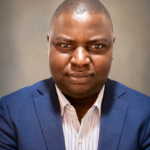
The defeat of Banky W in the 2023 general election was more than a political disappointment. By his own account, it became a turning point that forced him to reflect on his purpose, seek God’s direction and reconsider how he could make a difference beyond the political arena.
His recent reflection on that experience offers an opportunity to consider a question many people confront after a major setback: what happens when the future we have carefully planned does not unfold as expected?
Banky W, who contested the Eti-Osa Federal Constituency seat in Lagos State under the Peoples Democratic Party (PDP), lost to Labour Party candidate Thaddeus Attah. For someone who had invested time, energy and hope in public service through elective office, the outcome was understandably painful.
However, his subsequent experience suggests that political defeat does not necessarily mark the end of a person’s capacity to lead, serve or make an impact.
In recounting what followed the election, Banky W explained that he turned to God for direction. He reflected on whether his future lay in leadership and ministry, entertainment and business, or a combination of these pursuits. His eventual understanding was that these different responsibilities did not necessarily have to compete with one another. As he described it, God was expanding his assignment.
That perspective offers an important lesson about disappointment, faith and the willingness to reconsider one’s plans.
When the Expected Door Closes
People often attach their sense of fulfilment to a particular destination. For some, it is political office; for others, it is a business breakthrough, a professional promotion or the achievement of a long-held personal ambition.
When that goal remains out of reach, disappointment can make it difficult to recognise other possibilities. A failed election, unsuccessful business venture or rejected application may feel like a final verdict on one’s abilities.
Yet a setback does not always settle the question of what a person can achieve. Sometimes, it creates the circumstances for a reassessment of priorities, direction and opportunities.
For people who approach life through faith, this process may involve prayer, reflection and a renewed willingness to trust God when familiar plans no longer appear certain. The biblical account of Proverbs 16:9 captures this tension: people make plans, but the direction of their lives may unfold differently from what they anticipated.
This does not mean every disappointment should automatically be interpreted as a divine instruction to abandon an ambition. Rather, it encourages humility, reflection and openness to possibilities that may not have been considered before.
Banky W’s experience illustrates how such reflection can become a starting point for a different chapter.
Leadership Is Bigger Than Political Office
One of the most significant aspects of Banky W’s story is the possibility of serving society through more than one platform.
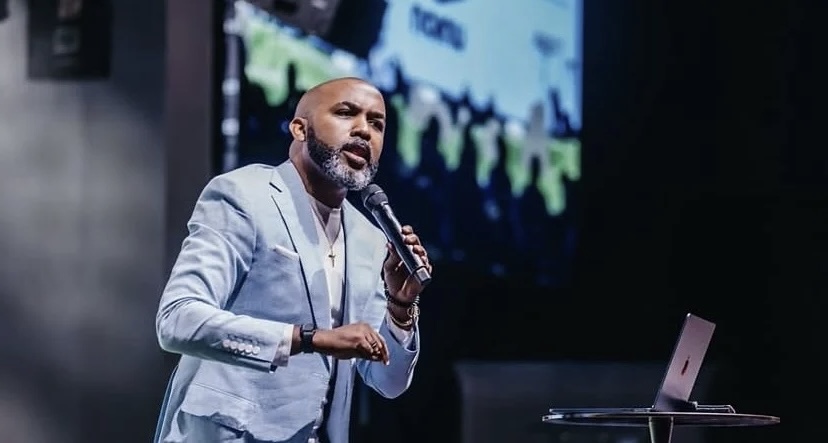
Following the election, he took on responsibilities connected with ministry and education in the United States. He has described serving as an associate pastor and global ambassador at Union Church, as well as a teacher and leader at Union College. At the same time, he has continued to identify with his work in music, filmmaking and business.
These roles demonstrate that public influence does not have to depend exclusively on holding elected office.
Political institutions are important because they provide opportunities to shape laws, public policy and the distribution of resources. However, communities also need leadership in education, business, faith institutions, creative industries and civil society.
A person who does not secure political office can still contribute to public life, mentor others, create opportunities, support communities and influence important conversations.
This is not to suggest that political participation is unimportant or that losing an election is necessarily a better outcome. Rather, it is a reminder that the value of a person’s contribution cannot be measured solely by whether they win an election.
Banky W’s experience invites people to consider the different ways their skills and convictions can serve a wider purpose.
Faith, Resilience and the Courage to Reassess
For a Christian audience, the story also raises questions about faith during periods of uncertainty.
It is often easier to speak confidently about purpose when circumstances are favourable. The more difficult test comes when expectations collapse and the next step is unclear.
In such moments, faith can provide a framework for endurance, reflection and renewed commitment. Romans 8:28, for instance, is frequently understood by Christians as an encouragement to trust God amid difficult circumstances. Its message, however, should not be reduced to the claim that every painful experience will immediately produce an obvious or measurable benefit.
People respond to setbacks differently, and not every disappointment leads to an immediate breakthrough. Some require time, difficult decisions, support from others and a willingness to begin again.
The important lesson is not that defeat should be celebrated for its own sake. It is that defeat does not have to define the rest of a person’s life.
Banky W’s account shows how a disappointing electoral outcome became the occasion for a serious reconsideration of his responsibilities and direction. His experience may encourage others facing uncertainty to examine what remains possible rather than allowing one failed ambition to determine their entire future.
The Lesson Beyond Banky W
There is also a broader lesson for anyone pursuing leadership or public service. Ambition can be valuable, but it must leave room for reflection. The desire to occupy a particular position should not become the only measure of whether a life is progressing meaningfully.
Political office can provide an important platform for service, but it is not the only one. Similarly, losing an election does not automatically prove that a candidate was unsuited to leadership, nor does it establish that the person would have been better off pursuing a different path.
The more useful question is what people do with the opportunities available to them after disappointment.
Banky W’s story does not provide a universal formula for interpreting failure, and it does not settle what his future in politics may hold. What it does offer is a personal account of how he responded to a painful experience by reconsidering his priorities and embracing responsibilities beyond the political contest he had lost.
For those who view life through the lens of faith, that process can be understood as an invitation to remain open to God’s direction. For others, it may simply be a reminder that life can offer meaningful alternatives when an expected opportunity disappears.
Either way, the lesson is worth considering: a setback may close one door without closing every path to purpose, service and personal fulfilment.
About the Author
Ugochukwu Ugwuanyi (VIS Ugochukwu) is a sage, storyteller and branding specialist. He welcomes feedback at [email protected].