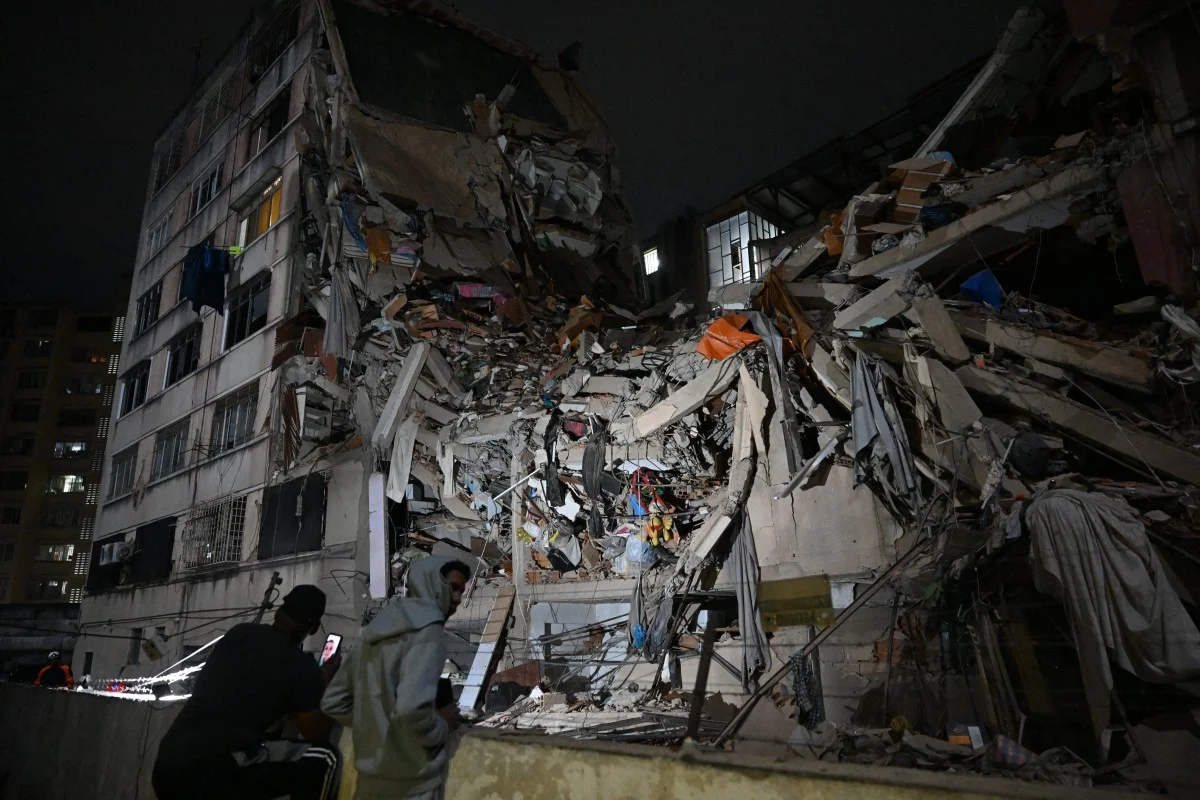



Rescue teams in Nairobi continued searching the rubble of a collapsed multi-storey building on Saturday, October 24, after seven people were reported missing following the disaster in Eastleigh.
Kenya’s Interior Cabinet Secretary, Kipchumba Murkomen, said all 67 construction workers at the site had been accounted for. One worker sustained injuries, while the other 66 escaped unharmed.
However, authorities believe seven people may have been inside shops on the building’s ground floor and basement when the structure collapsed on Friday afternoon along 9th Street, a busy commercial area.
According to Daily Nation’s report on the rescue operation, rescuers faced additional challenges after people trapped beneath the debris reportedly raised concerns that excavation work was affecting their oxygen supply.
The situation forced emergency teams to balance the urgency of reaching possible survivors with the need to remove debris carefully. The operation involves the Kenya Defence Forces, National Police Service, Nairobi City County Government, National Youth Service and Kenya Red Cross.
Missing Occupation Certificate Raises Safety Questions
Beyond the rescue operation, the collapse has drawn attention to how buildings are approved, inspected and cleared for occupation in Nairobi.
Governor Johnson Sakaja said the collapsed building did not have an occupation certificate, a document required before a completed structure can be occupied. The ground-floor shops were reportedly operating despite the wider development remaining under construction.
The reported absence of the certificate raises questions about how the premises came to be occupied and whether the relevant authorities enforced the applicable requirements.
An occupation certificate and construction approval serve different purposes. Approval to construct does not, by itself, mean a building has satisfied all requirements for occupation.
However, the absence of an occupation certificate does not establish what caused the structure to collapse. Investigators must determine whether structural defects, construction practices, inspection failures or other factors contributed to the disaster.
The distinction matters because identifying a regulatory concern is not the same as proving the cause of a structural failure.
Construction Records Identify Project Parties
Kenya’s National Construction Authority identified 9th Street Plaza Limited as the developer and Stromax Holdings E.A Limited as the contractor in its records for the project.
The authority also listed Emmanuel Mwangi Maina as the architect and Joseph Muturi Mugu as the structural engineer associated with the development, according to Daily Nation.
These records identify the parties named in connection with the project. They do not, on their own, establish that any of them acted negligently or breached professional obligations.
Authorities have cautioned against drawing conclusions about the building’s structural integrity or the cause of the collapse before investigations are completed.
The findings will be important in determining whether the incident resulted from construction-related failures, regulatory shortcomings or other circumstances. Any liability must be established through the relevant investigation and legal processes.
Why the Collapse Matters Beyond Eastleigh
The incident highlights the risks that unfinished buildings can pose when construction activity takes place alongside commercial operations.
Construction sites may expose workers to structural hazards, while occupied ground floors can put traders, customers and passers-by at risk if a building fails. In busy commercial districts, the consequences can extend beyond the construction workforce.
The case also raises a practical enforcement question: how effectively do regulators ensure that buildings meet the necessary requirements before people begin using them?
Building safety depends on more than approving plans. It also requires proper supervision during construction, appropriate inspections, compliance with approved designs and confirmation that buildings meet the conditions for occupation.
The Eastleigh investigation could therefore have implications for how authorities oversee construction projects and enforce occupancy rules. But the extent of any regulatory failure will depend on what investigators establish.
For now, the priority remains locating the seven missing people. Authorities have yet to establish the cause of the collapse, and the investigation must determine what happened before responsibility can be assigned.