Prince Folorunsho Adegoke is a media professional and journalist with experience in digital, television and print journalism. He covers Nigerian affairs, African development, international relations, housing and economic issues.
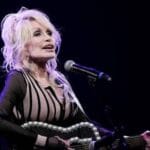
Country music legend Dolly Parton has died at the age of 80, her family has announced.
Parton’s nephew, Bryan Seaver, shared the news on Tuesday, August 25, through a video posted on the singer’s official social media accounts. Seaver described the announcement as a moment filled with both pride and profound sadness.
The cause of death had not been disclosed at the time of publication.
Parton’s death marks the end of a career that stretched across more than six decades. During that time, she became one of the most recognisable figures in country music while also building a successful career in film, business and philanthropy.
From humble beginnings to global stardom
Parton was born on January 19, 1946, in Sevier County, Tennessee. She grew up in a large family with limited financial means.
Her upbringing strongly influenced her music. She later credited her mother with introducing her to traditional songs and her father with teaching her the value of hard work.
Parton began performing while she was still a child. By the age of 13, she had appeared on radio and television programmes in Tennessee and performed at the Grand Ole Opry in Nashville.
She also recorded her first single, Puppy Love, at that age.
After graduating from high school in 1964, Parton moved to Nashville. She soon began establishing herself as a songwriter and performer.
Her debut album, Hello, I’m Dolly, arrived in 1967. That same year, she joined The Porter Wagoner Show, where country star Porter Wagoner helped introduce her to a wider audience.
‘Jolene’ and ‘I Will Always Love You’ changed her career
Parton eventually pursued a solo career and went on to produce some of the most enduring songs in popular music.
Among them were “Jolene” and “I Will Always Love You.”
She originally wrote I Will Always Love You about her professional separation from Wagoner. Years later, Whitney Houston recorded a hugely successful version for the 1992 film The Bodyguard, introducing the song to an entirely new generation.
Parton’s songwriting success continued with albums such as Jolene and Here You Come Again.
The latter became her first album to sell more than one million copies. It also earned her first Grammy Award.
Over her career, Parton wrote thousands of songs and collected 11 Grammy Awards. She also achieved 25 No. 1 country singles in the United States and 47 Top 10 albums.
Hollywood success followed
Parton’s talents extended beyond music.
In 1980, she made her major film debut in 9 to 5 alongside Jane Fonda and Lily Tomlin. She also wrote and performed the film’s title song.
The song became a major hit and earned an Academy Award nomination for Best Original Song.
Parton later appeared in films including The Best Little Whorehouse in Texas, Steel Magnolias and Joyful Noise.
Her career also expanded into television, business and entertainment ventures.
She built Dollywood into a major attraction
Parton became a successful entrepreneur as well as an entertainer.
One of her most notable ventures was Dollywood, the Tennessee theme park that became closely associated with her name and brand.
The park helped strengthen Parton’s connection with her home state while creating jobs and attracting millions of visitors.
However, her influence went far beyond entertainment.
Dolly Parton’s philanthropy touched millions
Parton’s charitable work became one of the defining parts of her later career.
Through the Dollywood Foundation’s Imagination Library, she supported childhood literacy by providing free books to children.
The programme has distributed more than 150 million books worldwide, according to The Guardian.
Parton also supported education, healthcare, disaster relief and medical research.
During the COVID-19 pandemic, she donated $1 million to research at Vanderbilt University, funding that was later linked to the development of the Moderna vaccine.
In 2022, she received the Carnegie Medal of Philanthropy in recognition of her charitable contributions.
Parton faced health concerns before her death
Concerns about Parton’s health became more prominent over the past year.
She postponed a planned Las Vegas residency and withdrew from several public appearances. However, she continued to reassure fans and remained involved in creative projects.
Her death came several months after the passing of her husband, Carl Thomas Dean.
Dean, whom Parton married in 1966, died in March 2025 at the age of 82. The couple had been married for almost six decades.
A legacy that extends beyond country music
Although Parton became known as the “Queen of Country Music,” her influence reached far beyond the genre.
Her songs crossed into pop culture. Her films attracted international audiences. Meanwhile, her charitable work created a legacy that extended well beyond the stage.
She also became an inspiration for generations of artists and songwriters.
Parton’s journey from a poor childhood in Tennessee to international superstardom became part of the story behind her appeal.
She turned personal experiences, relationships and observations into songs that connected with audiences around the world.
Now, following her death at 80, those songs will remain central to her legacy.
Dolly Parton leaves behind a body of work that spans music, film, business and philanthropy — and an influence that is likely to endure for generations.