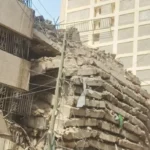



One person has died and three others were injured after a building under construction collapsed in Fadeyi, Lagos State, raising fresh questions about the enforcement of building safety regulations.
The structure collapsed on Akinola Street, off Ikorodu Road, in the early hours of Friday, October 23. Emergency responders rescued three men alive and recovered the body of another man from the rubble.
The Lagos State Government has blamed alleged non-compliance with earlier building-control notices for the incident. However, the cause of the collapse has not been independently established, and the relevant authorities are expected to investigate the circumstances.
Government Says Building Received Previous Notices
Olatunde Akinsanya, Director of Operations at the Lagos State Emergency Management Agency (LASEMA), said the building had received several notices before it collapsed.
According to a report by The Punch, Akinsanya argued that compliance with the notices could have prevented the disaster. He also attributed the incident to alleged attempts to cut corners in the construction process.
A stop-work notice from the building authorities was reportedly visible on a damaged section of the site’s fence.
The claims raise questions about whether regulatory warnings were followed up with effective enforcement before construction continued. However, the precise notices issued, the dates they were served and the developer’s response require further confirmation from the relevant authorities.
Three Workers Rescued, One Person Dead
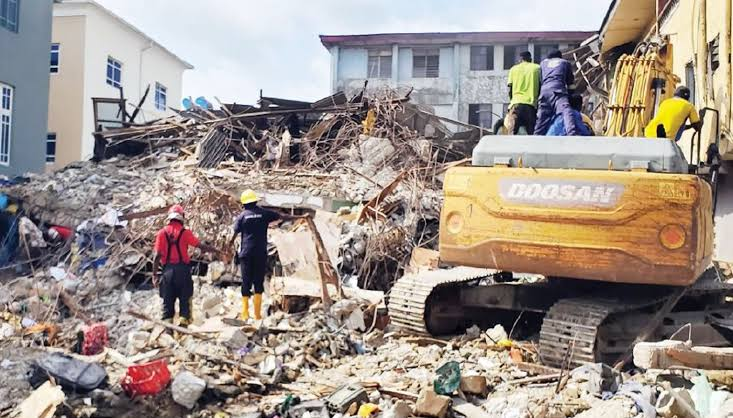
LASEMA said it received an emergency call after the collapse and deployed its response team to the scene. Rescue personnel used an excavator to help search the rubble for trapped workers.
Three adult men were rescued alive and received initial medical attention from emergency medical teams before being taken to hospital. One adult man was recovered dead.
The agency initially said the cause of the collapse had not been determined and that search operations were aimed at establishing whether anyone else remained trapped.
The incident highlights the immediate human cost of building failures, particularly at active construction sites where workers may be exposed to structural risks.
Nearby Buildings Face Safety Checks
Authorities are also examining potential risks to surrounding properties.
According to The Punch, the Lagos State Materials Testing Laboratory is expected to collect samples from the rubble for structural integrity tests. Buildings nearby that show visible cracks are also due to undergo assessment.
The checks could help determine whether neighbouring structures face similar risks and whether further intervention is necessary.
Residents and property owners around the site will be watching for the results, particularly any recommendations to evacuate, repair or remove buildings considered unsafe.
Building Safety Requires More Than Notices
The Fadeyi collapse raises a wider question for Lagos: how effectively do building-control agencies monitor sites after issuing stop-work orders or other regulatory notices?
Issuing a notice is an important enforcement step, but it does not by itself ensure compliance. Effective oversight also depends on follow-up inspections, clear records, appropriate sanctions and timely action where construction continues in breach of official directives.
The incident does not, on its own, establish the precise technical cause of the collapse or prove individual liability. Those conclusions must follow the relevant investigations and structural assessments.
For now, the immediate priorities are to establish the full circumstances of the incident, support the injured survivors and determine whether the site or nearby buildings pose further risks.
The findings could also help clarify whether existing enforcement procedures were followed and what measures may be needed to prevent similar incidents.