Taiwo is a Certified SEO Specialist and digital marketing expert with four years of experience in SEO strategy, keyword research, content optimization, and website analytics. Through data-driven SEO techniques, he has successfully increased organic traffic, improved search rankings, and enhanced brand visibility in many reputable news agencies.
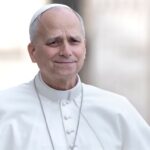
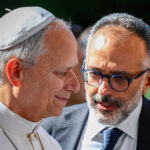
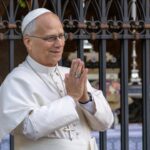
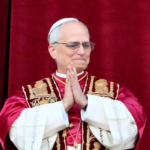
Pope Leo XIV has reportedly cast a mail-in ballot in the 2026 United States midterm elections, marking an unprecedented moment in the history of the papacy.
The Vatican reportedly confirmed on Friday that the Chicago-born pontiff exercised his voting rights as an American citizen ahead of the November 3 elections.
According to the account, the Holy See Press Office said Leo submitted his ballot in Chicago, Illinois, in keeping with his longstanding practice of civic participation.
“The Holy Father expresses his belief in the right and the duty of citizens to participate in democratic processes,” the Vatican reportedly said.
The development has attracted attention because Leo, formerly known as Robert Francis Prevost, is the first American-born pope and the first sitting pontiff whose participation in a US general election has reportedly been publicly confirmed.
Although he resides in Vatican City, the 70-year-old pontiff reportedly retains his American citizenship and remains registered to vote in Illinois.
From Chicago To The Vatican: Leo’s Citizenship
Born in Chicago, Illinois, Leo retained his American nationality after becoming pope in May 2025.
He is also a naturalised Peruvian citizen, having acquired Peruvian nationality during his years of missionary and church service in the South American country.
Before his election as pontiff, Prevost spent several decades in Peru, where he served as a priest, bishop and senior figure in the Augustinian religious order.
The report also states that he exercised his voting rights while living in Peru whenever he was eligible.
US citizenship rules do not automatically strip citizens of their nationality simply because they serve in a foreign government. Voluntary service in a foreign government may have citizenship implications where the individual intends to relinquish American nationality.
Leo’s reported participation in the electoral process therefore highlights the continued connection between his American citizenship and his responsibilities as head of the Catholic Church.
What The Pope Is Voting For
The November 3 midterm elections will determine the composition of the United States Congress for the next two years.
The elections will cover all 435 seats in the House of Representatives and 35 of the 100 seats in the Senate.
Governorships in 36 states will also be contested, alongside several state and local positions.
The elections are particularly significant for President Donald Trump because their outcome will determine whether Republicans retain control of both chambers of Congress or Democrats gain an opportunity to reshape the legislative balance.
According to the report, Leo’s Illinois ballot includes the contest to replace retiring Democratic Senator Dick Durbin and Governor JB Pritzker’s re-election bid.
However, neither the Vatican nor the pontiff has disclosed the candidates he supported.
His reported participation should therefore not be interpreted as an endorsement of any political party or candidate.
Leo’s Previous Voting History Crosses Party Primaries
Records of Leo’s previous participation in American elections reportedly show that he has requested ballots from both Democratic and Republican primaries.
According to records attributed to the Chicago Sun-Times, Prevost requested Democratic primary ballots in 2008 and 2010.
He subsequently participated in Republican primaries in 2012, 2014 and 2016.
He also voted in several general elections, including those held in 2012, 2014, 2018 and 2024.
Illinois operates an open-primary system, allowing voters to choose which party’s primary ballot they wish to participate in without permanently registering with that party.
Consequently, participation in both Democratic and Republican primaries does not establish a voter’s political affiliation or ideological preferences.
His previous voting history also provides no evidence of how he voted in the current election.
The Vatican’s reported decision not to disclose his ballot choices is consistent with the principle of ballot secrecy.
Pope Leo’s Public Disagreements With Trump
The reported vote has also attracted attention against the background of Leo’s public disagreements with President Trump over immigration, international conflicts and the use of religious arguments to justify military action.
Since becoming pope, Leo has spoken against policies and actions he considers inconsistent with human dignity, peace and the Christian responsibility to protect vulnerable people.
One major area of disagreement has been the Trump administration’s immigration policies, particularly mass deportations and the treatment of migrants.
The pontiff has also criticised the US position on the conflict involving Iran, warning against using religious language to justify violence and military escalation.
Trump reportedly criticised Leo in April, describing him as weak on crime and questioning his foreign policy positions.
The pontiff subsequently maintained that he would continue speaking out when he believed government actions contradicted the message of the Gospel.
These disagreements have attracted international attention to relations between the White House and the Vatican.
However, Leo’s reported decision to vote does not establish support for any political party or candidate.
A Distinctive Moment In Papal History
Although previous popes have maintained connections with their countries of origin, Leo’s reported participation in an American election represents a notable development in the modern history of the papacy.
His predecessor, Pope Francis, retained his Argentine citizenship after becoming pontiff in 2013. However, the report identifies no established public record confirming that Francis voted in an Argentine election while serving as pope.
Similarly, previous pontiffs, including Benedict XVI and John Paul II, maintained strong connections with their countries of origin.
However, there is no established evidence in the supplied account that either participated in national elections while occupying the papal office.
Leo’s case is distinctive because the Vatican reportedly confirmed his participation in a national election while he remained head of the Catholic Church.
Catholic Church Emphasises Responsible Civic Participation
Beyond the political implications, the Vatican’s reported explanation highlights the Catholic Church’s longstanding teaching on civic responsibility.
The Church encourages responsible participation in public life, including democratic processes, while maintaining that its spiritual mission should not become an extension of partisan political interests.
Its social teaching emphasises political participation, the common good, human dignity and the responsibility of public authorities to serve society.
In this context, Leo’s reported vote represents an exercise of individual citizenship rather than an attempt to use the papacy to influence an election.
The development also raises broader questions about citizenship, religious leadership and democratic participation.
For the first American-born pope, the reported mail-in ballot connects his American citizenship with his position as leader of the Catholic Church.
It also highlights the distinction between individual civic responsibilities and the institutional independence of the Church.