Tinubu Sets October 1 Transport Test as Nigeria Targets 1,000 CNG Stations
The Federal Government says cheaper fuel should translate into cheaper fares, but delivery will depend on infrastructure, state governments and transport operators.
Prince Folorunsho Adegoke is a media professional and journalist with experience in digital, television and print journalism. He covers Nigerian affairs, African development, international relations, housing and economic issues.
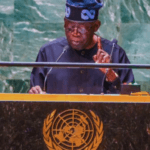
President Bola Ahmed Tinubu has set October 1, 2026 as the target for Nigerians to begin seeing lower public transport fares, as the Federal Government and state governments move to expand the use of compressed natural gas (CNG) and electric vehicles.
The announcement comes with a fresh push to expand Nigeria’s CNG infrastructure, including an additional 500 refuelling stations that would take the planned nationwide network to 1,000 stations.
Tinubu disclosed the plan after meeting with state governors in Abuja, saying the Federal and state governments would establish a joint committee to immediately work on measures to reduce transportation costs, particularly within states.
The President said the objective was straightforward: savings from cheaper vehicle fuel should reach commuters through lower fares.
The promise behind the CNG expansion
The administration says more than 120,000 vehicles have already been converted to CNG nationwide under the Presidential CNG Initiative, while more than 100,000 additional conversion kits are in the works.
The government is also expanding refuelling and conversion infrastructure. Through the Midstream and Downstream Gas Infrastructure Fund, more than 100 gas projects are being financed, including 15 CNG mother stations and 86 daughter stations.
Tinubu has now directed another 500 CNG refuelling stations to be rolled out nationwide, in addition to the 500 stations previously ordered under the programme. Details of the CNG expansion and transport-fare plan
The government is betting that a wider network will make CNG more accessible to commercial transport operators and reduce one of their largest operating expenses.
Why Nigerians may remain cautious
The promise of cheaper transport comes at a time when commuting costs remain a major burden on households.
For many Nigerians, particularly low- and middle-income earners, transport fares affect not only daily movement but also the cost of food, goods, services and access to employment.
That makes the October 1 target more than another energy-policy milestone. It is a test of whether the government’s CNG strategy can produce a benefit that Nigerians can actually feel in their pockets.
The challenge is that cheaper fuel does not automatically guarantee cheaper fares.
Transport operators still have to convert their vehicles, obtain reliable access to CNG, maintain their vehicles and operate on routes where demand and competition vary widely.
State governments will also have a major role because intra-state transport is largely where commuters experience the cost most directly.
What has to happen before October
For the promised reduction to become visible, several pieces have to work together.
More CNG stations need to become operational. More commercial vehicles need to be converted. Gas supply must remain reliable, while transport operators need sufficient incentives to pass lower fuel costs to passengers.
The Federal Government and states will also need an effective mechanism for monitoring fares and ensuring that savings are not absorbed entirely as additional margins.
That could prove to be the most difficult part of the programme.
A cheaper fuel source can reduce operating costs, but commuters will only benefit if the savings actually reach them.
A bigger test for Tinubu’s economic reforms
The October deadline gives Nigerians a simple way to judge one part of the government’s energy-transition strategy.
The administration has spent considerable political capital arguing that moving away from petrol dependence and expanding domestic gas use can help reduce the economic pressure created by the removal of fuel subsidies.
CNG is central to that argument.
The government has already demonstrated that some infrastructure can be delivered. In May, Tinubu commissioned several CNG projects in Lagos, Abuja and Owerri, including an Abuja facility designed to serve hundreds of vehicles and a network of refuelling stations in Lagos.
The next challenge is scale.
Moving from individual projects to a nationwide network of 1,000 planned stations is a substantially larger undertaking.
The real question is what commuters will pay
The government’s target is clear: Nigerians should begin to benefit from lower transport fares from October 1.
But the success of the policy should ultimately be measured at bus stops, motor parks and on the roads, not by the number of CNG stations announced.
If transport operators begin cutting fares as fuel costs fall, the policy could provide meaningful relief to households already struggling with high living costs.
If fuel costs decline but fares remain largely unchanged, the government will face difficult questions about where the promised savings are going.
October 1 therefore represents more than a deadline.
It is the point at which Nigerians will begin to see whether the promise that cheaper fuel must mean cheaper fares can move from government policy to everyday reality.