


The Nigerian National Petroleum Company Limited (NNPC Ltd.) has commissioned its first technology-powered self-service smart station in Abuja, introducing a new model of fuel retailing that allows motorists to dispense petrol themselves.
The facility, located on Bill Clinton Drive along Airport Road, Abuja, operates 24 hours and combines conventional fuel retailing with electric vehicle charging, LPG dispensing and automotive services.
The commissioning took place on September 10, 2026, as NNPC Retail Limited began implementing plans to transform selected conventional filling stations into broader energy and mobility hubs.
The station was developed by NNPC Retail in partnership with the Nigeria Immigration Service (NIS), which provided the land for the project.
How the self-service system works
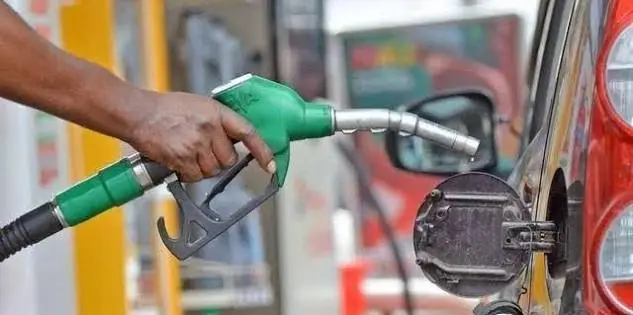
The new model allows motorists to complete fuel transactions digitally and dispense the exact quantity they purchase.
Customers use the NNPC Retail mobile application to make payment and generate a code, which is then used at the pump to release the purchased fuel.
The system allows motorists to fuel their vehicles independently, including at night. However, NNPC said staff would remain available to assist customers who need help using the digital system.
The move marks a departure from the conventional model in which attendants handle most fuel dispensing transactions.
NNPC Executive Vice President, Downstream, Mumuni Dagazau, said the objective was not simply to automate fuel sales but to turn traditional filling stations into integrated energy hubs.
“We are trying to turn from a filling station to an energy hub,” Dagazau said.
Solar power and multiple energy options
The Abuja facility is powered entirely by an installed solar system with capacity exceeding 200 kilowatts, according to NNPC.
It has 16 Premium Motor Spirit (PMS) pumps and two Automotive Gas Oil (AGO) pumps. NNPC’s official statement puts the facility’s storage capacity at 180,000 litres of PMS and 5,000 litres of AGO.
The station also features LPG dispensing, an automated car wash and a lubricant service bay.
It includes an electric vehicle charging facility developed in partnership with Africa Motor Works. NNPC’s official release describes the facility as having an 86-point capacity, while other reports have described the currently available charging points differently. The official NNPC figure is therefore used here.
The station also has space for a quick-service restaurant, coffee shop and convenience store, further broadening its services beyond conventional fuel retailing.
CNG facilities planned
NNPC Retail has also made provision for the future installation of Compressed Natural Gas (CNG) infrastructure.
Plans include CNG vehicle conversion facilities at some smart stations, giving motorists the option of converting vehicles while accessing other services.
The move comes as Nigeria’s downstream energy market continues to diversify, with petrol, diesel, LPG, CNG and electric mobility increasingly forming part of discussions around the country’s future transportation and energy mix.
NNPC targets 50 to 70 smart stations
The Abuja facility is expected to be the first of a wider network.
Dagazau said NNPC plans to deploy between 50 and 70 smart self-service stations across Nigeria within the next six months. He also said four or five similar stations were planned for Abuja, with two others being launched in Kano.
The planned rollout would expand the self-service model beyond Abuja and introduce more motorists to digital fuel transactions and integrated energy services.
NNPC’s wider objective is to transform conventional filling stations into energy hubs where customers can access different forms of energy and related mobility services from one location.
Will self-service stations affect jobs?
The shift toward self-service has raised an obvious question about the future role of filling-station attendants.
Dagazau rejected concerns that the model would eliminate jobs. He said the expanded services would require personnel to support automation, electric vehicle charging, integration and customers.
The NNPC executive argued that the broader energy-hub model could require more workers than conventional filling stations because of the additional services being introduced.
This means the immediate change is more about how customers receive services than removing human support altogether.
A new direction for fuel retailing
The Abuja smart station represents a broader shift in NNPC Retail’s approach to downstream operations.
Instead of relying solely on petrol and diesel sales, the company is combining fuel retailing with renewable energy, electric mobility, LPG, vehicle maintenance and digital transactions.
For motorists, the model promises more control over fuel purchases and access to multiple services at one location.
For NNPC, the planned rollout will test whether technology-enabled energy hubs can become a viable replacement for the traditional filling-station model at scale.
The next major test will be the nationwide deployment of the planned 50 to 70 stations and whether customers adopt self-service fuel dispensing alongside the new energy and mobility services.